AI May Outpace Facial Recognition — Altman-Backed Firm Pushes World ID as Human Proof
For years, facial recognition has quietly become the default way we prove our identity online. Whether it’s unlocking a smartphone, accessing a banking app, or logging into a secure workspace, the human face has been treated as the ultimate password. But according to Tiago Sada, Chief Product Office
TECH NEWS
AllComputerss
4/18/20263 min read
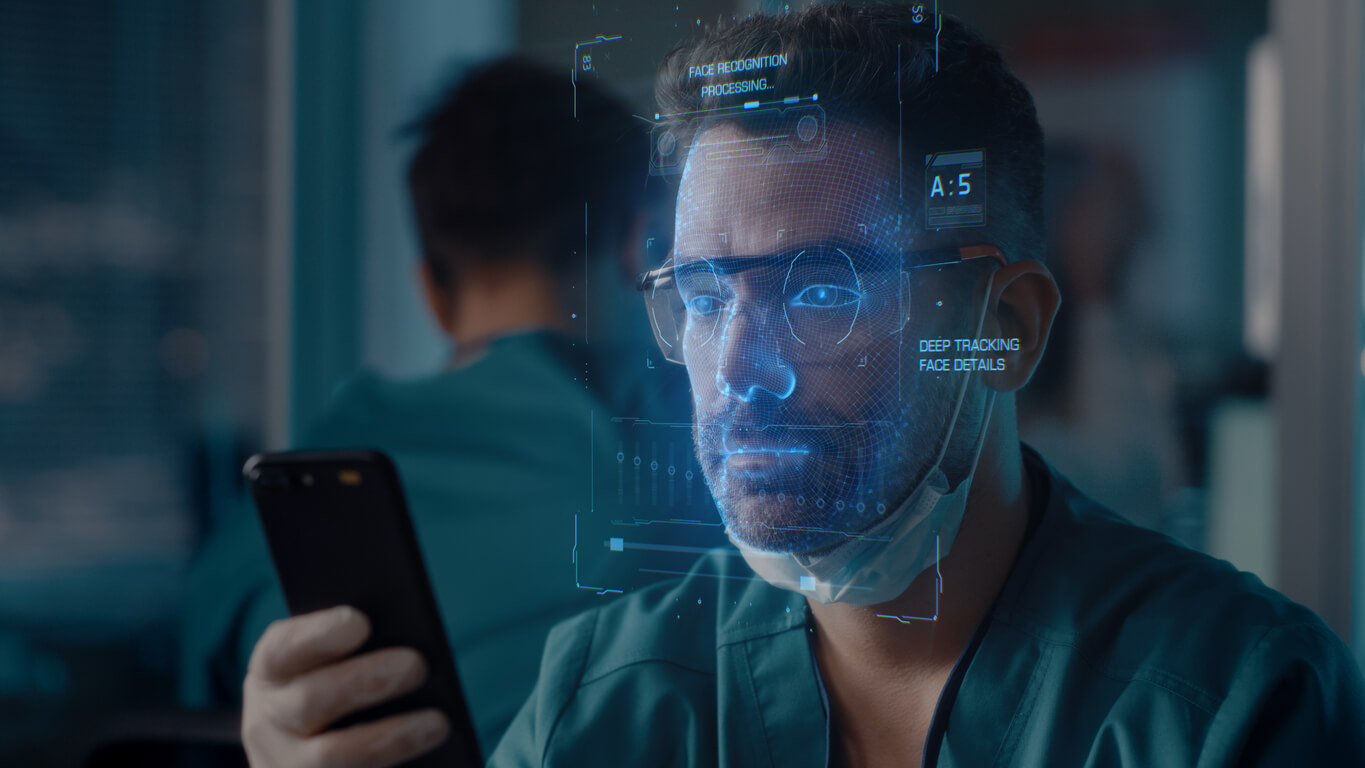
For years, facial recognition has quietly become the default way we prove our identity online. Whether it’s unlocking a smartphone, accessing a banking app, or logging into a secure workspace, the human face has been treated as the ultimate password. But according to Tiago Sada, Chief Product Officer at Tools for Humanity, a startup backed by Sam Altman, that reliance may soon collapse under the weight of artificial intelligence.
“Over time the AI is going to get so powerful that really, the face thing is probably going to break,” Sada warns. His point is simple: as generative AI learns to produce hyper-realistic faces, voices, and even entire digital personas, the systems we trust today for identity verification could be rendered useless.
Enter the Orb: A Sci-Fi Device With a Serious Purpose
Tools for Humanity is best known for its Orb, a spherical device that looks like something out of a futuristic film but is designed with a very practical mission: proving you’re human. Inside the Orb are layers of sensors, cameras, and a powerful Nvidia chip that analyze biometric signals in real time. Unlike Face ID, which simply checks if your face matches a stored template, the Orb attempts to determine whether the entity in front of it is a living, breathing person.
You don’t buy an Orb; you visit one. They’re placed in public spaces like malls and coffee shops. Once scanned, you receive a World ID, a digital credential stored on your phone that lasts for years, much like a driver’s license. Initially, critics dismissed the Orb as a gimmick, but Tools for Humanity has been steadily upgrading its system to make World ID more useful across everyday platforms.
From Dating Apps to Concert Tickets
The company’s latest protocol upgrade expands World ID’s reach. Tinder, for example, piloted the system in Japan to combat catfishing and is now preparing for a global rollout. Reddit has begun testing it to filter out bots, while Zoom is integrating “World ID Deep Face” to protect against deepfake impersonations during video calls.
Perhaps the most eye-catching application is “Concert Kit,” a new tool that allows artists to reserve tickets for verified humans, shielding fans from scalpers and automated bots. Major acts like Thirty Seconds to Mars and Bruno Mars are already on board, with exclusive VIP experiences tied to World ID verification.
Businesses are also finding value in the system. DocuSign is adopting it to ensure contracts are signed by real people, while Tools for Humanity is introducing “Agent Kit”, a framework for AI agents that verifies they’re acting on behalf of actual humans.
Why Face ID Isn’t Enough
Sada draws a sharp distinction between authentication and verification. Face ID on your iPhone is excellent at confirming that you are holding your device, but it doesn’t prove to the wider world that you’re human. AI-generated faces, masks, and synthetic identities can trick these systems. As AI grows more sophisticated, the risk isn’t just one-off impersonations, it’s the mass production of convincing digital humans at scale.
That’s why Tools for Humanity argues that a stronger, independent verification system is needed. World ID isn’t mandatory, Sada stresses, but it can enhance trust. On Tinder, for instance, verified users get extra boosts, while unverified users can still participate normally. The idea is to incentivize verification without forcing it.
A Glimpse Into the Future
The implications are profound. Sam Altman, who also leads OpenAI, finds himself funding both the acceleration of AI and a safeguard against its unintended consequences. It’s a paradox that underscores the urgency of the problem: as AI becomes capable of mimicking humanity with frightening accuracy, society will need new ways to separate the real from the synthetic.
The Orb may look whimsical, but its mission is anything but. If “the face thing” really does break, as Sada predicts, then systems like World ID could become essential infrastructure for digital life. What once seemed like a quirky gadget might soon be the frontline defense against a world where anyone, or anything, can look human.
© 2026 AllComputerss. All rights reserved.