Apple Relaunches AI Push With Siri, Already Stumbling on Key Hurdle
Apple unveils a revamped Siri AI to reignite its artificial intelligence ambitions, but regulatory hurdles and hardware limits show the road ahead won’t be easy.
TECH NEWS
AllComputerss
6/9/20265 min read
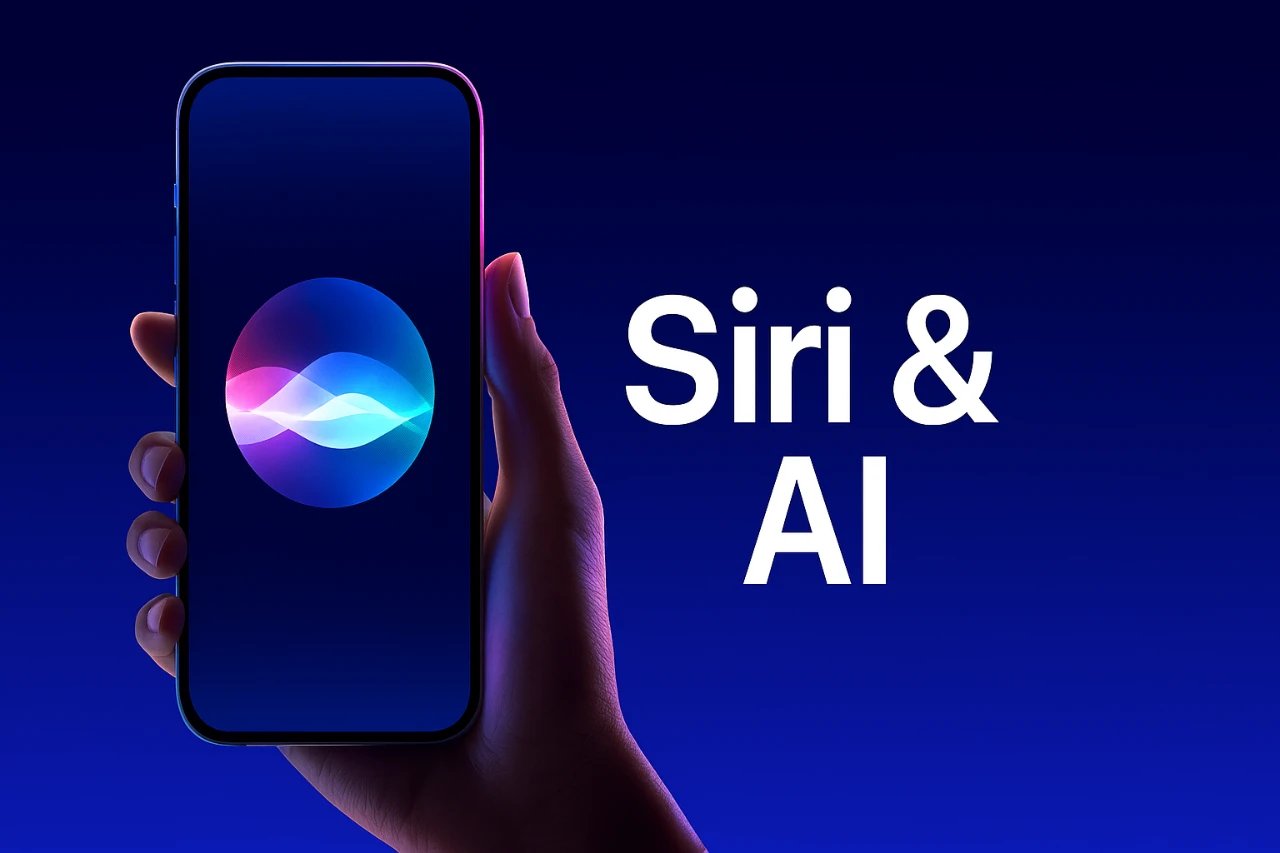
For years, Apple’s Siri has been the butt of jokes in the tech world, an assistant that launched with promise in 2011 but quickly fell behind rivals like Google Assistant, Amazon Alexa, and more recently, OpenAI’s ChatGPT. At WWDC 2026, Apple finally unveiled what it calls the “new Siri AI,” a sweeping reinvention that aims to reposition Siri as the centerpiece of Apple’s artificial intelligence ambitions.
But while the announcement signals Apple’s most aggressive move yet in the AI race, the rollout is already facing hurdles—from regulatory battles in Europe to hardware limitations and questions about whether Apple is simply too late to catch up.
Siri AI: Apple’s Conversational Leap
Apple’s keynote showcased Siri AI as more than a voice assistant, it’s now a conversational chatbot designed to rival ChatGPT and Google’s Gemini. Built on Gemini’s large language models but tightly integrated into Apple’s ecosystem, Siri AI promises contextual awareness, expressive voices, and cross-device continuity.
In demos, Siri set reminders, played music, and searched for photos, all through natural voice commands. On iPad and Mac, Siri AI is embedded into Spotlight and context menus, allowing users to right-click on images, files, or text for instant AI-powered insights. On Macs, Siri even opens in a dedicated window, functioning like a productivity assistant capable of drafting emails or offering recommendations.
Apple also emphasized personalization: Siri can remember conversations across devices, sync context seamlessly, and even adjust its voice’s pace and expressivity. A new on-device model delivers human-like speech without relying on cloud servers, though this feature is limited to newer hardware like the iPhone 17 Pro, iPad M4, and Macs with M3 chips or later.
Privacy as Apple’s Differentiator
Apple’s pitch hinges on privacy. Senior VP Craig Federighi took a jab at rivals, claiming they “pursue AI for the sake of AI” without regard for users. Apple insists Siri AI is “the world’s most private digital assistant,” thanks to its hybrid architecture: on-device processing combined with “Private Cloud Compute,” which ensures requests leaving the device aren’t permanently stored.
This privacy-first narrative is central to Apple’s strategy. Unlike competitors who rely heavily on cloud data, Apple argues that its control over hardware, operating systems, and services allows it to deliver AI experiences without compromising user trust.
The European Union Roadblock
Despite the fanfare, Apple admitted Siri AI won’t launch on iOS or iPadOS in the European Union due to the region’s strict Digital Markets Act (DMA). Apple claims the DMA forces it to grant “nearly unlimited access” to devices for third-party AI systems, including the ability to read messages, make purchases, and execute actions across apps—something Apple argues undermines privacy and security.
As Federighi put it, “Their refusal to engage constructively on solutions that preserve privacy and security means we do not currently have a timeline for Siri AI’s availability on iOS and iPadOS in the EU.”
This echoes Apple’s earlier struggles: EU users didn’t get Apple Intelligence until months after its U.S. debut. China also presents regulatory challenges, meaning Apple’s AI rollout will be staggered globally.
Siri’s Evolution: From Reactive Assistant to Digital Operator
Historically, Siri has been reactive—answering commands but lacking continuity. The new Siri AI changes that. It maintains conversation awareness, understands what’s on your screen, and can act across apps.
Imagine receiving an event poster in Messages: Siri can extract the date and add it to your calendar. Or a receipt shared in a chat, Siri could analyze it and split costs among contacts. This shift transforms Siri from a passive assistant into a digital operator capable of managing workflows.
Apple’s advantage lies in its ecosystem. Because it controls both hardware and software, Siri can tap into personal data, emails, messages, calendars, reminders, while promising privacy safeguards. This integration is something competitors, who often operate as standalone apps, struggle to replicate.
Analysts Weigh In: Opportunity and Skepticism
Industry analysts see both promise and pitfalls. Patrick Moorhead of Moor Insights & Strategy bluntly noted: “They have to make Siri not suck.” He emphasized that AI is all about data, and Apple’s challenge is unlocking personal context without violating privacy.
Forrester’s Andrew Cornwall expects Apple to let developers plug into Siri via “extensions,” potentially choosing among AI models like Gemini, OpenAI, or Anthropic. This could make Siri a gateway to multiple AI systems rather than a single closed platform.
But skepticism remains. Ben Bajarin of Creative Strategies doubts Apple will embrace emerging technologies like OpenClaw, AI agents capable of autonomously managing online services, citing security risks and consumer unreadiness.
Hardware and Developer Adoption: The Hidden Hurdles
Even if Siri AI delivers on its promises, adoption may be slow. Advanced features require powerful neural processors, limiting availability to newer devices. Critics argue this accelerates hardware upgrade cycles, turning AI into another reason to buy the latest iPhone or Mac.
Developer support is another bottleneck. Siri’s ability to perform actions across apps depends on third-party developers building integrations. If adoption lags, Siri’s most ambitious features could remain theoretical for years.
Apple’s AI Strategy: Experience Over Technology
One consistent theme is Apple’s framing of AI not as raw technology but as user experiences. While rivals tout breakthroughs in reasoning or autonomous agents, Apple emphasizes practical features, drafting messages, managing reminders, or contextual awareness.
This approach reflects Apple’s broader philosophy: consumers don’t buy technology for its own sake, they buy experiences. By embedding AI into everyday workflows, Apple hopes to make Siri indispensable without overwhelming users with abstract concepts.
The Bigger Picture: Apple’s AI Future
Apple’s reinvention of Siri is more than a product update, it’s a strategic pivot. By positioning Siri as the intelligence layer across its ecosystem, Apple is betting that control over the interface, not the underlying models, will define success in the AI era.
The partnership with Google’s Gemini underscores this shift. Apple doesn’t need to build the best model in every category; it needs to own the gateway through which users access AI. In this vision, Siri becomes less of a chatbot and more of a traffic controller, orchestrating tasks across devices and apps.
If successful, Siri AI could reshape Apple’s smart home ambitions, enhance productivity across Macs and iPads, and even redefine how wearables and future devices interact with users. But the road ahead is fraught with challenges, regulatory battles, hardware constraints, developer adoption, and the simple fact that Apple is late to a race already dominated by mature competitors.
Conclusion
Apple’s unveiling of Siri AI at WWDC 2026 marks its boldest step yet into the generative AI arena. With promises of privacy, contextual intelligence, and deep ecosystem integration, Siri AI could finally transform Apple’s long-neglected assistant into a true digital operator.
Yet the hurdles are real: Europe’s DMA, China’s regulations, hardware limitations, and developer adoption all threaten to slow progress. Whether Apple can overcome these obstacles and deliver on its vision will determine if Siri AI becomes a cornerstone of the company’s future, or another missed opportunity in the fast-moving AI race.
References
© 2026 AllComputerss. All rights reserved.